
Gawalmandi Food Street

Basic Information
Gawalmandi Food Street
Gawalmandi Food Street. While Fort Road is known for its royal views, Gawalmandi is celebrated for being the authentic soul of Lahori cuisine.
Basic Information
Location: Near Gawalmandi neighborhood, accessible via Nisbet Road and McLeod Road, Lahore.
Significance: Known as the first official food street of Pakistan.
Status: Currently undergoing a revitalization project (late 2025) by the Punjab Government to restore its historical charm and improve infrastructure.
Vibe: High-energy, crowded, and deeply traditional. It’s a “working-class” food heaven compared to the upscale Fort Road.
🍽️ Top Restaurants for Tourists
Gawalmandi is about specific “master stalls” rather than large haveli restaurants:
Haaji Sardar Fish: Legendary for its deep-fried Lahori Rahu fish, a must-visit in winter.
Amritsari Hareesa: The most famous spot for slow-cooked meat and lentil stew, a recipe brought by migrants from Amritsar.
Feeka Lassi: Known globally for its heavy, creamy lassi topped with “peda” (sweetened milk solids).
Sadiq Halwa Puri: The premier destination for a traditional Lahori Sunday breakfast, prepared in pure desi ghee.
Cheeda Siri Paye: Famous for slow-cooked trotters, a favorite for late-night or early-morning diners.
🏙️ Info for CityHub92 Visitors
Authenticity: This is where you go for “Real” Lahori flavors. It is less “touristy” and more “local.”
Budget: Extremely affordable. You can enjoy a full traditional feast for a fraction of the price of M.M. Alam or Fort Road.
Logistics: The street becomes a pedestrian-only zone in the evenings. Parking can be difficult; it is highly recommended to use a ride-sharing app (Uber/Indrive) to avoid the traffic of the nearby Mayo Hospital area.
Cash is King: Unlike Fort Road, most vendors here still prefer cash over credit cards.
🎨 Cultural Significance
The Amritsari Connection: Much of the food here is influenced by the families who migrated from Amritsar in 1947, bringing unique spice blends that you won’t find anywhere else in the world.
The Architecture: The street is lined with centuries-old buildings featuring colonial-era balconies and narrow alleyways that reflect the “real” Old Lahore lifestyle.
The Pioneer: It set the blueprint for all other food streets in Pakistan, proving that street food could be a major cultural and economic driver.
Address Details
Attributes
Gawalmandi is not just a food street; it is a living museum of Lahore’s post-partition cultural evolution. Its history spans from a colonial-era milk market to becoming the first officially designated "Food Street" in the country.
The "Milkman's Market" (Pre-1947): The name "Gawalmandi" is derived from two words: Gawala (Milkman) and Mandi (Market). Before 1947, the area was the primary hub for the city’s buffalo milk trade. The neighborhood was a posh residential district outside the Walled City, characterized by elegant colonial-style buildings and wide balconies.
The Migrant Legacy (1947): Following the Partition of 1947, a massive wave of families migrated from Amritsar, East Punjab, and Kashmir and settled in Gawalmandi. Finding themselves in a new city with limited employment, these families turned to what they knew best: their heritage recipes. They opened small stalls in front of their homes, introducing Lahore to "Amritsari" spice blends, gram-flour coated fish (Sardar Fish), and slow-cooked meat stews (Hareesa).
The Birth of the "Food Street" (2000): While food stalls had existed for decades, it wasn't until 2000 that the local government officially recognized it as a tourism landmark. The street was pedestrianized, and the historic facades were restored. It became a global sensation, attracting ambassadors and celebrities, and proved that street food could be a formal pillar of urban tourism.
Revival and Restoration (2025): After a period of administrative neglect and closure in the early 2010s (due to political and traffic shifts), Gawalmandi has seen a major revitalization in late 2025. The current restoration project focuses on resolving infrastructure issues while preserving the "raw" authenticity that differentiates it from the newer, more commercial food streets.
Media
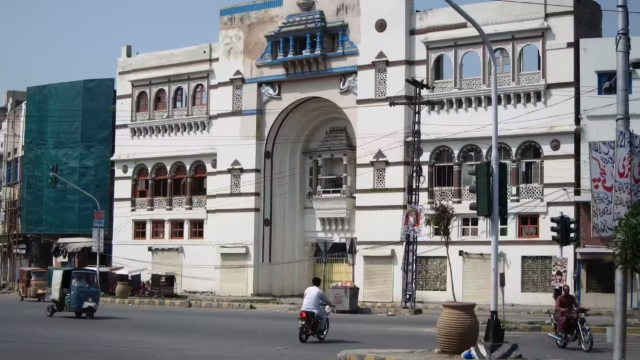
Lakshmi Chowk
- Easy
- Lahore
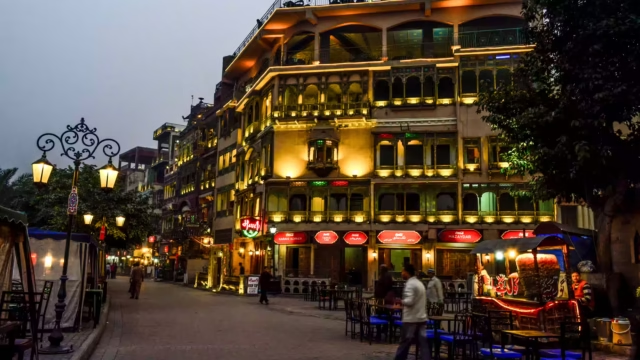
Fort Road Food Street
- Easy
- Lahore
Explore more trusted local businesses.
Login to Write Your ReviewThere are no reviews yet.